
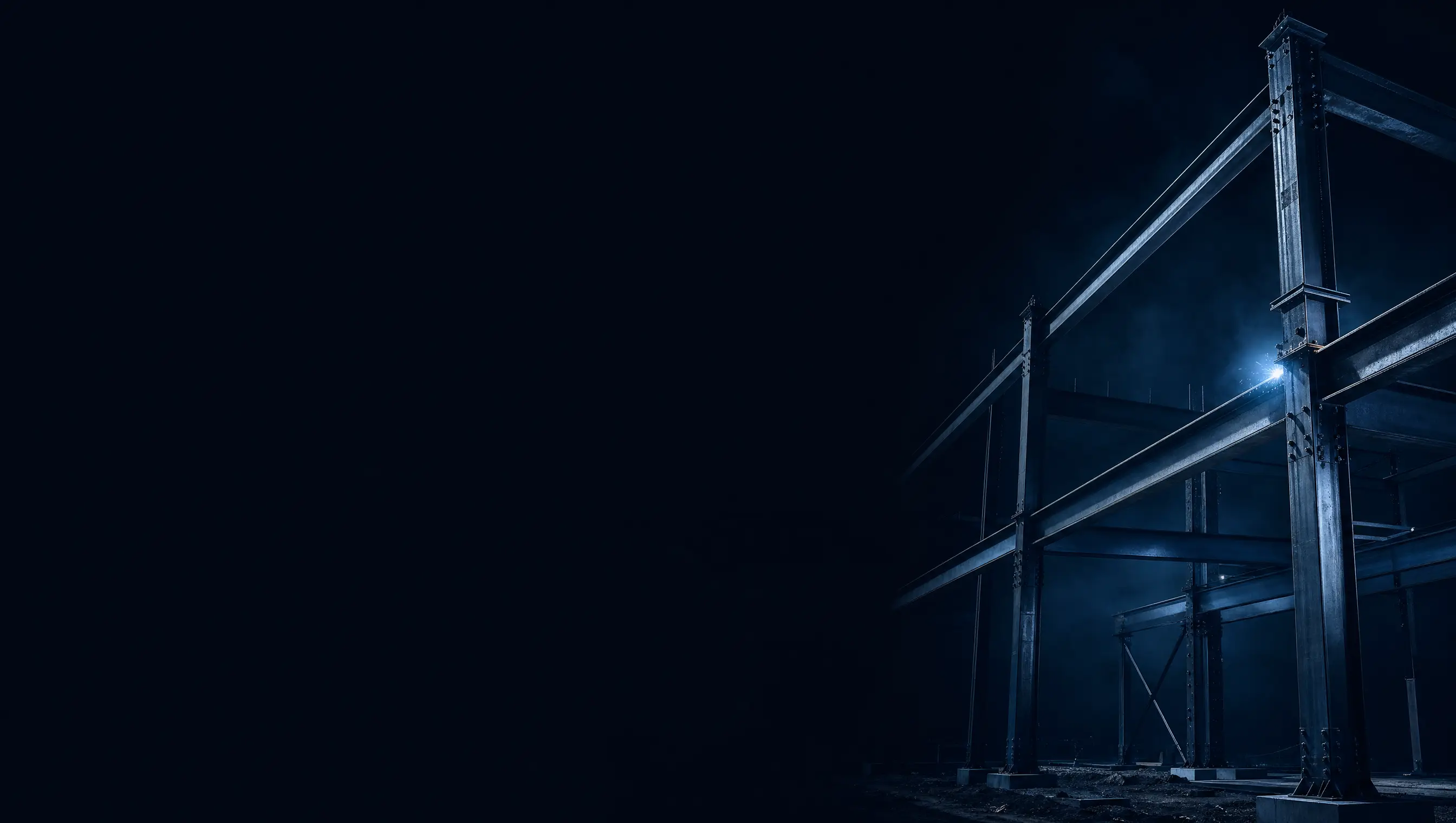
Steel fabrication is the process of turning raw steel into finished components built to a design: cutting, drilling, welding and finishing steel sections and plate so they fit together and do the job the drawings intend. A steel fabricator is the workshop, and the people in it, that carries out that work. In practice it covers everything from a single beam over a knocked-through wall to the full frame of a building, made from standard steel sections and plate rather than cast or moulded in one piece.
T C Rowan is a Banbury steel fabrication business that works to the BS EN 1090 execution standards on its structural steelwork projects. This guide explains what fabrication is, what a fabricator does day to day, how it differs from structural steelwork, and what to look for when you choose one.
What a steel fabricator actually does
A fabricator takes a design and makes it real in steel. The core operations are straightforward to describe, even though doing them accurately is skilled work:
- Cutting steel sections and plate to length and shape, by saw, plasma, laser or oxy-fuel.
- Drilling and punching holes for bolted connections.
- Welding the pieces together so the joints carry load as intended.
- Finishing the steel so it survives its environment, by painting, priming or galvanising.
Around those operations sits the work that separates a controlled fabricator from a back-street one: reading and interpreting drawings, sourcing the right grade of steel, keeping material traceable, following approved welding procedures, and inspecting the finished components before they leave the workshop.
Steel fabrication versus structural steelwork
These two terms are often used as if they mean the same thing, and they overlap, but they are not identical.
Steel fabrication is the broad activity: any cutting, drilling, welding and finishing of steel to make a component. A staircase, a balustrade, a gate, a mezzanine and a building frame are all fabricated steel.
Structural steelwork is the subset of fabrication that is load-bearing: the beams, columns, portal frames and braced frames that hold a building or structure up. Here the steel carries weight, and safety depends on it being the right size, the right grade and correctly connected. So all structural steelwork is fabrication, but not all fabrication is structural. The distinction matters because structural work brings in extra controls: engineer’s calculations, execution standards and Building Control.
The typical fabrication process, drawings to delivery
Most projects follow the same broad sequence, whatever their size:
- Drawings. The fabricator works from approved drawings, ideally checked against a site survey so the steel fits the real opening or structure, not just the plan.
- Material. Steel of the correct grade and section is ordered, with material traceability where the job calls for it.
- Workshop. The steel is cut, drilled, welded and assembled into components by qualified welders following approved procedures.
- Finishing. The components are protected against corrosion, for example primed, painted or galvanised, to suit where they will live.
- Delivery and erection. The finished steelwork is delivered to site, and for structural work craned and bolted into position by an erection team.
The big practical question for a buyer is how many companies are involved across those steps. When one fabricator handles design, fabrication and erection in-house, the chain stays accountable from the first drawing to the final bolt, and there is no gap for one supplier to blame another.
What to look for in a steel fabricator
For anything load-bearing, the most useful test is whether the fabricator works under a controlled system rather than on trust alone:
- BS EN 1090 and CE approval. Fabricated structural steel is a construction product. A fabricator working to the BS EN 1090 execution standards is making steel under a documented, audited system. Our guide to CE marking and UKCA for structural steelwork explains why this matters and what the marks actually mean.
- Material traceability. The ability to show what steel went into your job, on request.
- Qualified and coded welders. Welding to approved procedures, not improvised.
- In-house capability. Design, fabrication and erection under one roof reduces handover risk.
For structural work specifically, remember that beam sizing needs a structural engineer’s calculation, and load-bearing work needs Building Control sign-off. A reputable fabricator will expect both and will not guess at sizes to win the job.
T C Rowan is a single fabricator from drawing to final bolt: CE approved, working to BS EN 1090, with in-house design, its own Banbury workshop and its own erection team. If you have drawings or just an idea of what you need, get in touch for a free quote.
Frequently asked questions
What is a steel fabricator?
A steel fabricator is a workshop, and the people in it, that turns raw steel into finished components built to a design. The work involves cutting, drilling, welding and finishing steel sections and plate so they fit together and perform as the engineer’s drawings intend. A good fabricator works from approved drawings, controls how the steel is sourced and welded, and can deliver and often erect the finished steelwork on site.
What is the difference between steel fabrication and structural steelwork?
Steel fabrication is the broad activity of cutting, drilling, welding and finishing steel to make components. Structural steelwork is fabrication applied to load-bearing parts of a building or structure, such as beams, columns and portal frames, where the steel carries weight and safety depends on it. All structural steelwork is fabrication, but not all fabrication is structural; a balustrade or gate is fabricated steel that is not load-bearing in the structural sense.
What does the steel fabrication process involve?
The usual sequence is drawings, then material, then workshop, then delivery. The fabricator works from approved drawings, orders steel of the right grade with traceability where needed, then cuts, drills, welds and finishes the components in the workshop. The steel is protected (for example painted or galvanised), delivered to site, and for structural work erected and bolted into place. A single fabricator handling all of these stages keeps the chain accountable from drawing to final bolt.
What should I look for in a steel fabricator?
For load-bearing work, check that the fabricator works to the BS EN 1090 execution standards and is CE approved, because that means the steel is made under a controlled, audited system rather than to a verbal promise. Ask about material traceability, qualified and coded welders, and whether they handle design, fabrication and erection in-house. For structural work, beam sizing needs a structural engineer’s calculation and load-bearing work needs Building Control sign-off.